
 App Store ↗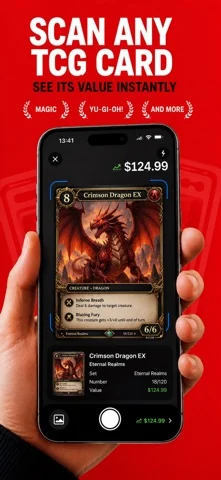
THE REVIEW
An iPhone inventory and value-tracking workflow
CardlyMon targets collectors who want scanning and a visual inventory in the same place. Its official site names several games, while collection export and printed-card language coverage remain undocumented in the checked sources.
Games and card-language editions.
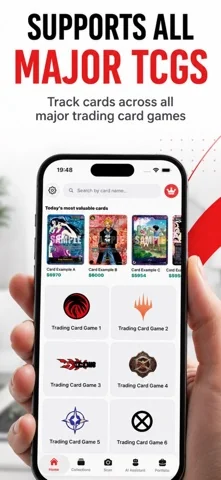
Pokémon, MTG, Yu-Gi-Oh!, One Piece, Lorcana; sports cards
11 interface languages; printed-card language editions not enumerated
Scanning into a collection
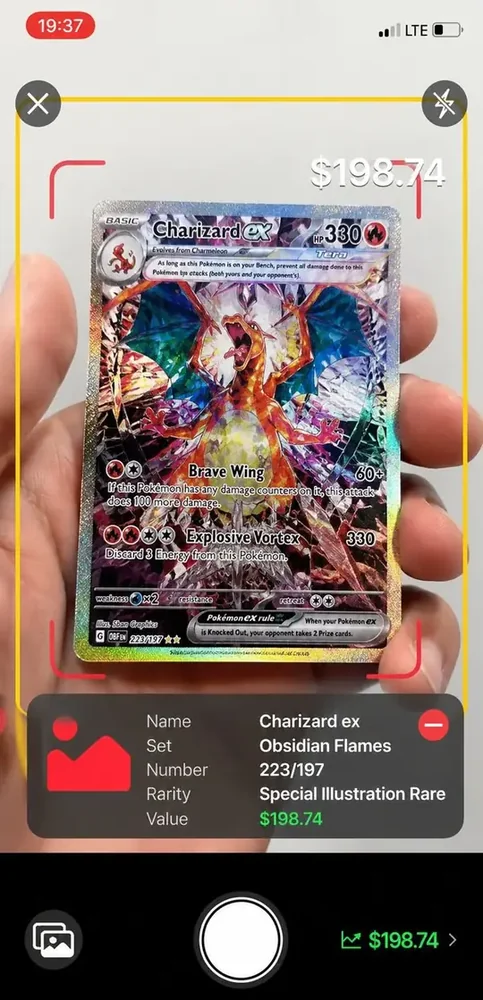
The app uses a card photograph to identify a collectible and display card details. Its next step is saving the card to an inventory so that scans become a persistent collection.
This makes sense for a gradual cataloguing workflow: identify a card, review its details and build the inventory over successive sessions. The published materials focus on camera recognition and collection tracking.
Games and printed editions
The developer website names Pokémon, Magic, Yu-Gi-Oh!, One Piece, Lorcana and sports cards. This is more specific than the store description’s general trading-card category wording.
Apple lists 11 interface languages, including Japanese, Korean and Simplified Chinese. That localization list is separate from printed-card edition support, which the checked sources do not enumerate.
Collection and value tools
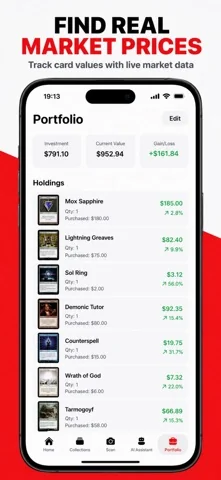
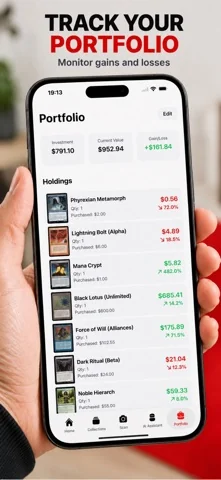
CardlyMon documents an inventory, favorite cards, collection totals and changes in estimated value over time. The collection dashboard is meant to keep holdings and market movements together.
For an existing binder, its strongest stated use is maintaining a visual record with pricing context. Edition and condition remain key fields to compare when reviewing any individual estimate.
Free download and subscriptions
The US App Store lists weekly access at $7.99, a Weekly Trial purchase at $9.99, monthly access at $19.99 and yearly access at $49.99. These are the storefront’s named purchase options.
Apple labels the download free with in-app purchases. The sources checked do not state a continuing free scan allowance, so the download label alone does not establish the cost of processing a whole collection.
Export and device availability
The verified listing is the iPhone app from Applus Mobil Hizmetler Limited Sirketi. Its official materials describe inventory management and tracking, but do not document collection-file export.
A collector choosing an app for a long-term archive should evaluate data portability alongside the camera workflow. No matched Android listing was established for this review.
Latest iOS update
Version 1.1.2 was released on July 15, 2026. The developer describes scanning and general performance refinements. The update note does not supply a measured recognition result or name newly added card editions.
Editorial feature score: 6/10.
Five documented feature criteria, each worth up to two points. How we compare apps.
- Card scanning: 2/2. Camera-based card identification is documented in the official app listing; access limits are assessed under free access.
- Game breadth: 2/2. Developer website names five TCGs plus sports cards.
- Collection management: 2/2. Inventory, favorites, collection totals and value tracking documented.
- Exports: 0/2. No documented export found in sources checked
- Free access: 0/2. Free download listed; ongoing free scan allowance not documented.
Latest iOS release.
Version 1.1.2 · Released 2026-07-15. Read the developer’s release notes ↗.
CardlyMon: your questions.
Is CardlyMon legit?
CardlyMon is listed on the Apple App Store by Applus Mobil Hizmetler Limited Sirketi. The official links in this review identify that publisher’s app, its store ratings and release history.
Is CardlyMon Cardly AI?
No. CardlyMon is the Applus app; Cardly AI is published by Scate.
Which games does CardlyMon name?
Its official website names Pokémon, MTG, Yu-Gi-Oh!, One Piece, Lorcana and sports cards.
Is CardlyMon completely free?
It is free to download with paid subscription options; a continuing free scan allowance is not documented in the checked sources.
Does CardlyMon have a collection export?
The checked official materials describe collection management but do not document a collection-file export.